
One can ascend to a higher development only by bringing rhythm and repetition into one’s life.
Steiner
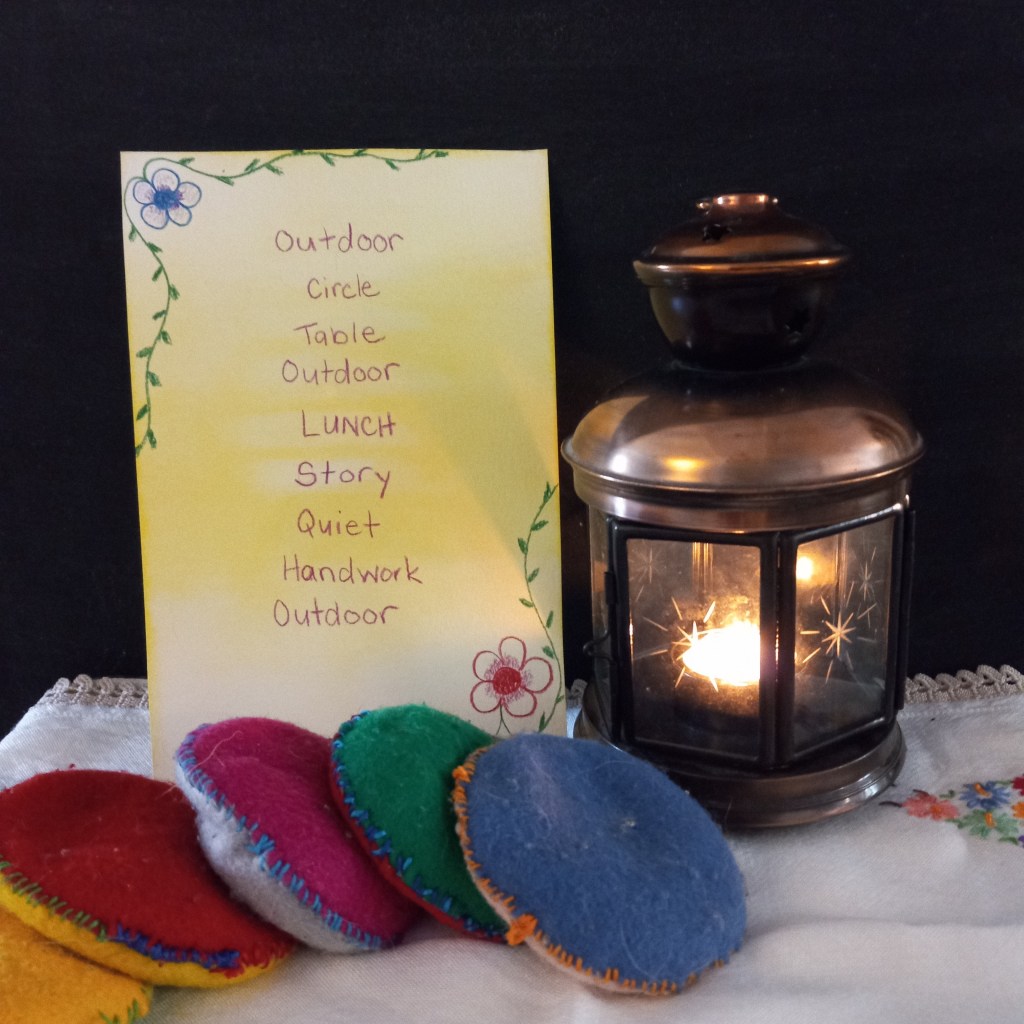
When my children were smaller I had a home daycare. We’d start every day outside and when we came indoors, the children would see this little table with our rhythm card displayed. Once the candle was lit, each child would take a bean bag, even the youngest, and we’d start our little circle time together. Five children aged 7 down to 15 months old, all together, held in strength and comfort by our rhythm.
I look back on those days fondly ❤ The days were filled with wonder and curiosity, and most importantly, time for the children to live freely. I did so much work to create a rhythm that would support everyone’s needs AND help me hold the space. There was, of course, some trial and error along those first few weeks, but working out the bumps is always worth it in the end. A rhythm that works is like a second adult in the room. It supports us as parents just as much as it supports our children.
Often families I mentor have purchased all the bells and whistles trying to find the one thing that will make their home life click. If something isn’t working with main lesson, they buy new curriculum. If transitions are hard, they buy all the charts, songs and visuals trying to support their children. When things are still not working, they purchase parenting books to see if a solution falls within the pages. It is all done out of love and a firm desire to give their children the best life possible. I can see the frustration and sadness in their eyes during our first meeting together, because they are STRIVING, but things just aren’t clicking.
My first question to any family that is struggling is “What’s your rhythm like?” If we can create (or recreate, because rhythms change with the needs of the family) a strong foundational rhythm, many struggles will smooth out so we can get to work addressing the other possible problems.
In her book or articles, Walking With Our Children, Nancy Blanning set a scene that many of us have experienced. A three year old child is playing on their own before dinner and has troubles transitioning to the dinner table to eat. Because it is a busy night, dinner was ordered in and placed on the table, and when the child was called, she responded by asking for five more minutes (moving through time is a concept children under seven have not yet fully grasped, so five minutes really means “not right now” in this case). Nancy Blanning goes on to describe all the hidden cues that were missing from dinner that night. The clanging of pots and pans, the smells of food cooking, hearing the table being set. All of these are cues that we don’t often thing about, but since children are sensory beings they are cues that are experienced deeply and help create a bridge for children from one activity to the next.
When we have a strong rhythm that we are dedicated to leaning into each day, the cues take place naturally. And when we have days where our rhythm cannot be fulfilled, because those days do happen, we as the adults need to find ways to recreate some of the cues so that transitions are calm and expected. My children at 13 and 15, are STILL surprised when dinner doesn’t consist of the pre-game banging and clanging and wonderful scents wafting from the kitchen. They are much more able to transition at this age, but often they will be surprised at dinner arriving and haven’t yet started to wrap up tasks they were working on.
Children and adults thrive when their environment is calm, secure and affords a certain amount of predictability. Rhythm provides all these elements to your day.
Warmly
Marina
Discover more from Growing Together in Freedom
Subscribe to get the latest posts sent to your email.

