The “art” aspect of a Steiner inspired homeschool was, for the longest time, a bit of a stumbling for me. It was one of the last things I tackled from a curriculum and innerwork standpoint. I always included artistic experiences in all of learning, but it wasn’t something I felt confident in at all.
It wasn’t until I was prepping to teach my first physics block to my eldest that I really threw myself in to all things colour. And once I surrendered myself to the unknown, and let myself experience it all without inhabitations, that’s when I truly saw the magic and wonder behind colour.
You must let the children live in the experience of colour … We should let him do all kinds of things on the paper in colour, for by this means he can be led into the secrets of the world of colour. It is, for instance, extremely interesting to see how the children fidn their way into the nature of colour, if to begin with they are allowed simply to cover a white surface with bright colours.”
Steiner, Dornach 1921
Steiner indicates that when starting to paint with children to use pots of watercolour paints in primary colours, and let them build a feeling for the way colours interact on the page and with each other. He provides examples of starting with a red dot in the middle and surrounding it with blue, and then in another activity reversing. This is repeated with all the primary colours and then eventually you work with all three on the page to bring about how all three colours work together to make the secondary colours.
The early primary grades are spent using the three primaries to create much of their artwork, learning over time how yellow takes over the page and red as a warmth and closeness and blue creates distance and brings about a coolness. All of this is deduced over time and with support and guidance from the teacher.
As they get into the older grades and physics of grade six/seven/eight, they learn a bit more about colour and slowly build to highschool, where they dive into colour theory.
Many families with older children who might have only just discovered Steiner/Waldorf education often ask me, “Do I need to start my children from the beginning, and only use the three colours?” I usually answer it is a great place to start, but with older children there is not a need to stay at the slower pace of the early elementary explorations. With my own older children (aged 12 and 14 at the time), I created a block called, The Secret Life of Colour.
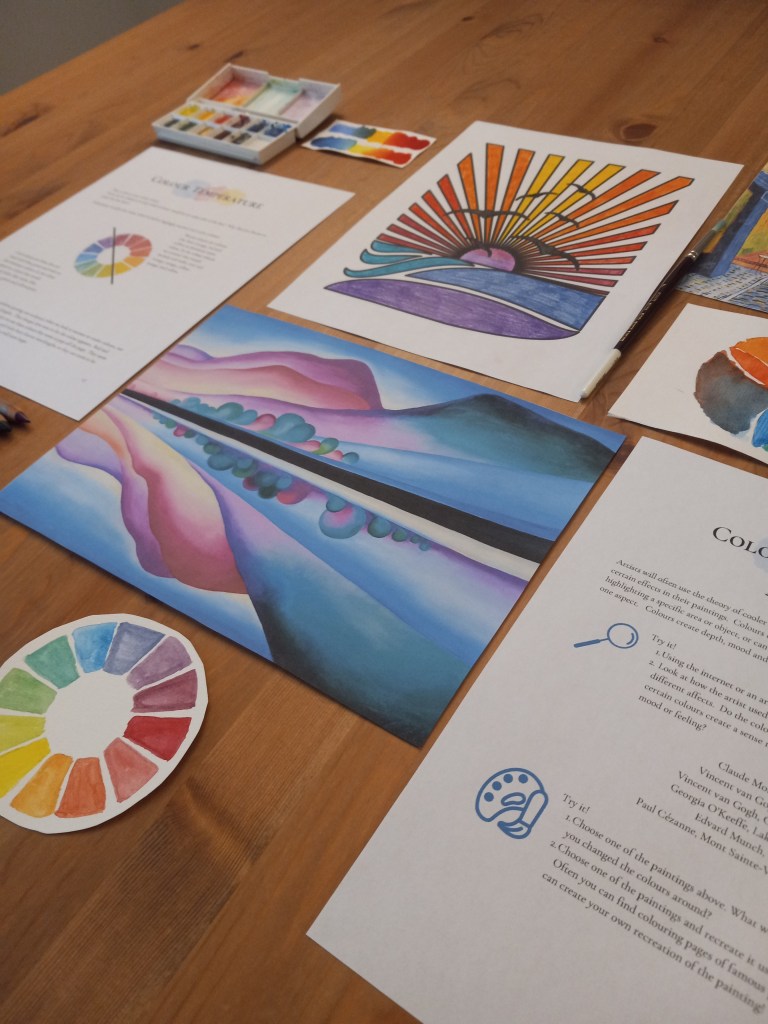
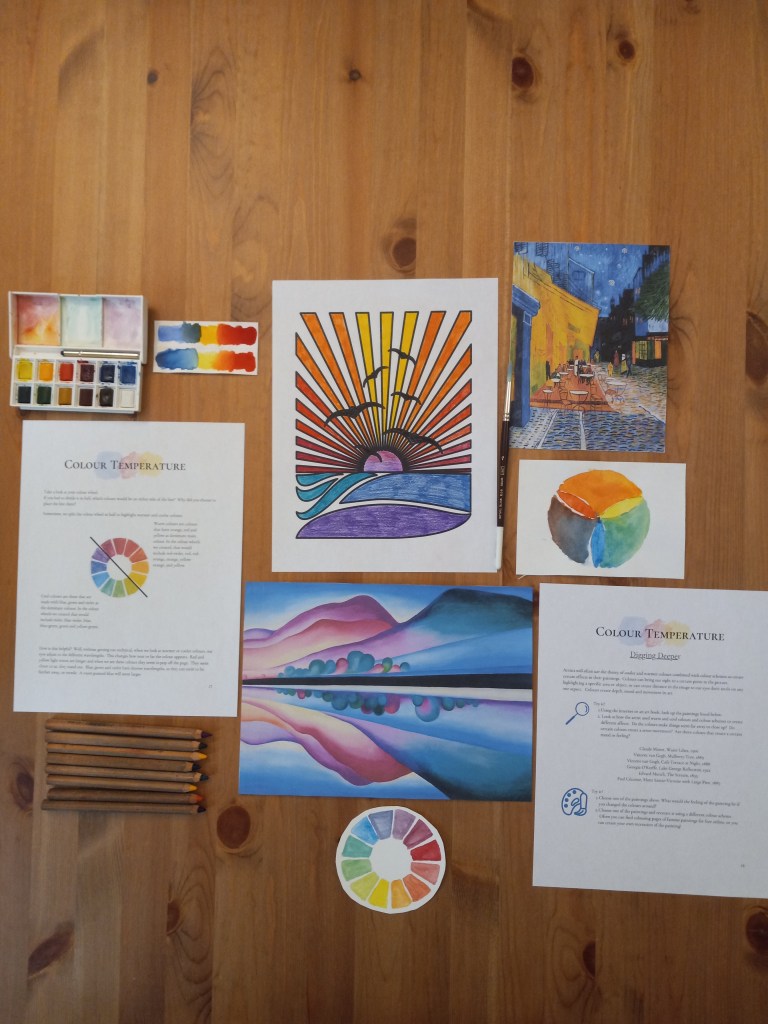
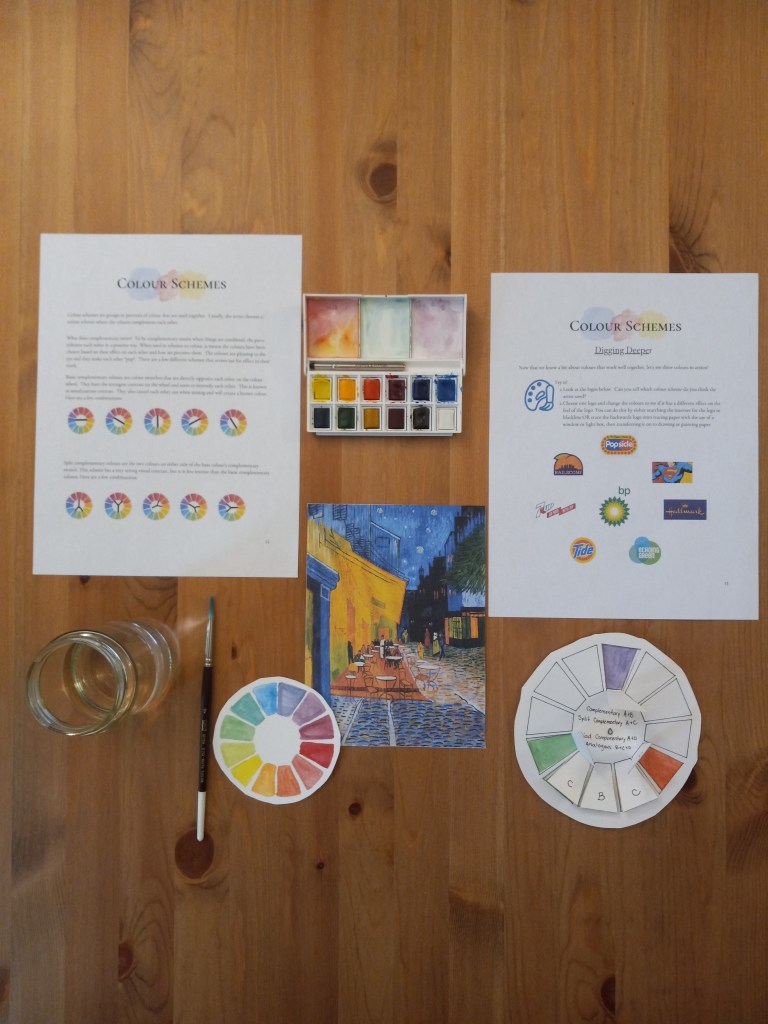
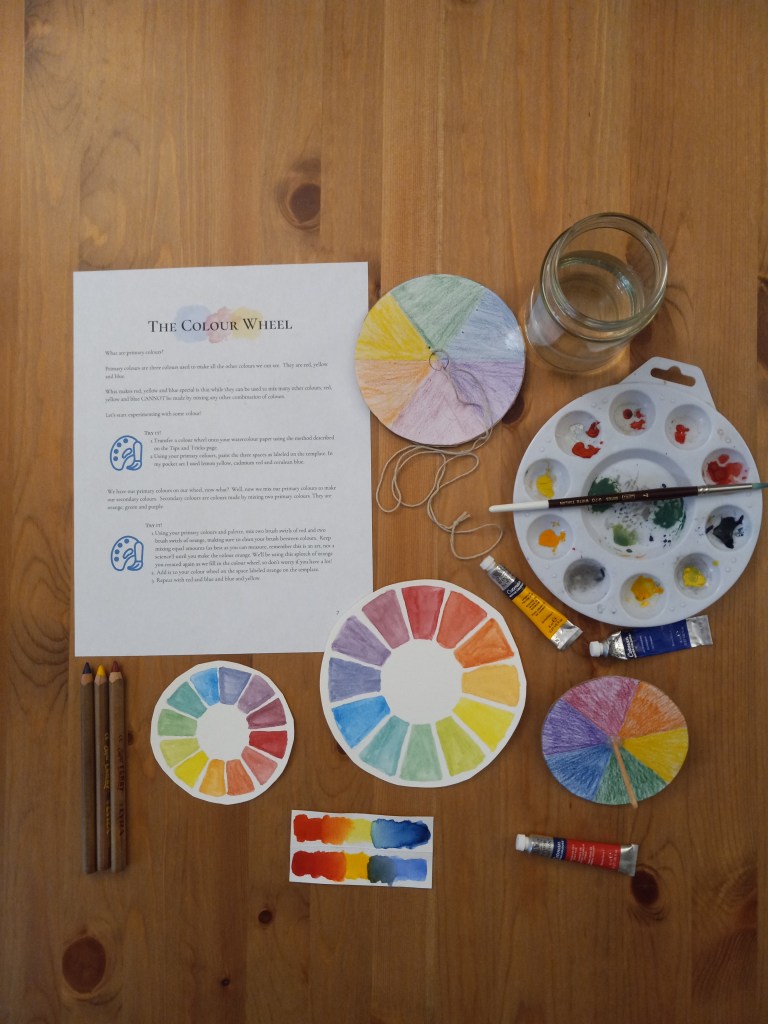
I had so much fun creating this block! As most of my block are, this is a family learning unit geared for middle and high school aged learners, meeting each of my children right where they are. The focus is on primary colours and the creation of the colour wheel. It is extremely hands on, takes you step by step through each activity, and includes templates. For this block, we are going to focus on colour mixing on a flat paint palette, and not with wet on wet painting technique that is typically used in Steiner classrooms. I have already done quite a bit wet on wet with my children and they are ready and enjoy the new found control found when mixing on a palette and applying it to dry paper.
Each topic includes a diving deeper section geared toward those who are ready for more information. I plan to use those sections with my 14 year old, and keep the focus on the basics of colour with my 12 year old. We’ll touch on the diving deeper sections once she is in high school.
I will probably end up breaking the block into two because there are so many fun activities I didn’t want to leave out and I don’t want to rush the experience. The four main topics I chose are :
- The Colour Wheel
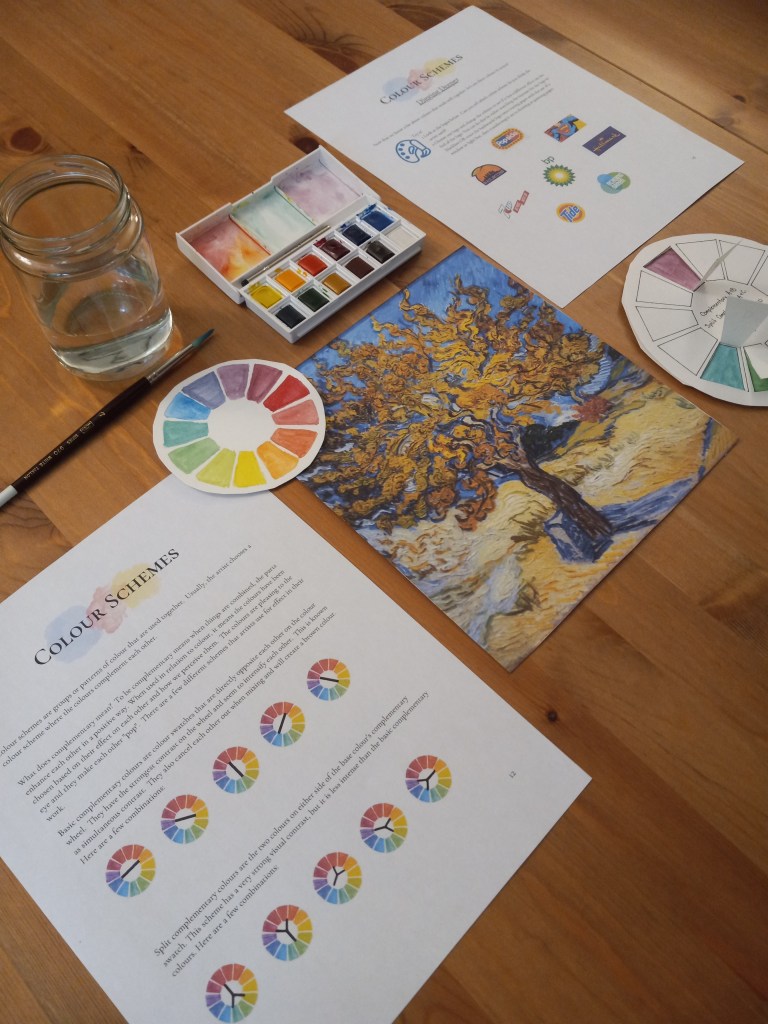
- Colour Schemes/Complementary Colours
- Colour Temperature
- Colour Mixing
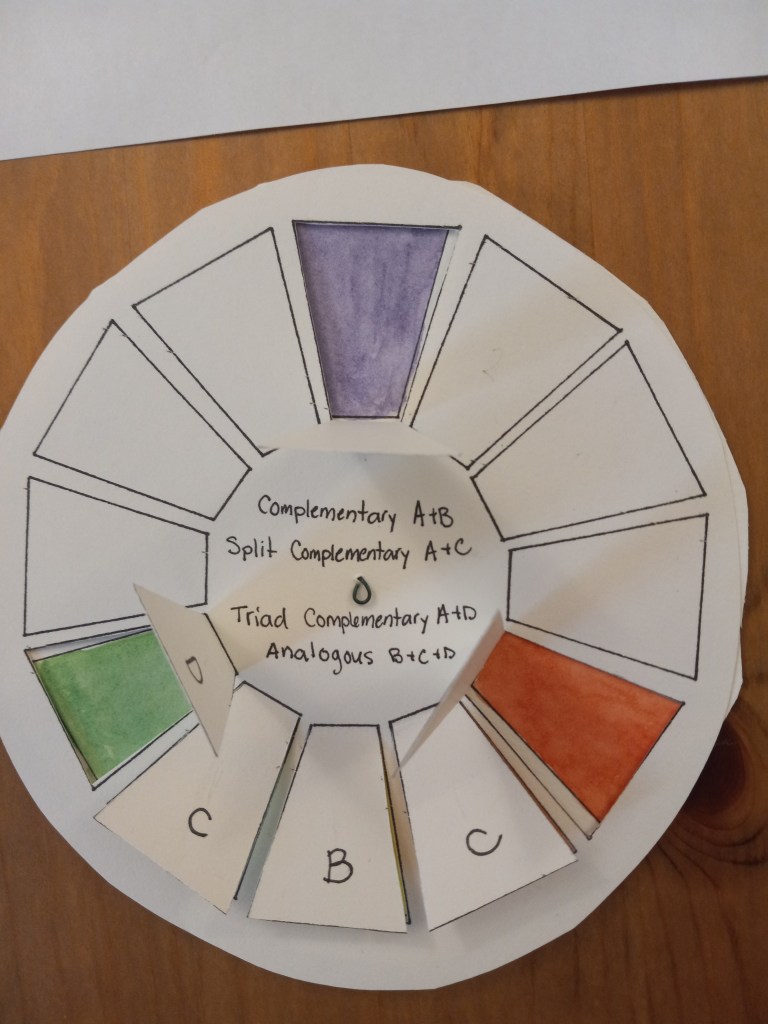
Some of that hands on and digging deeper activities include creating Newton’s Colour Spinner, making a colour scheme window wheel, digging into colour psychology, creating or recreating logos using specific colours, additive and subtractive colour mixing, art study and recreating famous works of art to reflect a different colour scheme or temperature.
It’s going to be a fun one!
Marina
Discover more from Growing Together in Freedom
Subscribe to get the latest posts sent to your email.

