Main lesson books are a staple in Waldorf education. They are a place to record, in an artistic way, the adventures of learning. I like to view them as a portfolio.
When searching for main lesson book examples online, you will often find pages that are fully coloured, often with a intricate boarder around the edges of the page, and a beautiful handwritten summary.
You will also probably find much written about the three day rhythm of learning, where you introduce a new topic on day one (thinking), children recall on day two and new material is introduced often through an artistic activity (feeling), and on day three another recall, then record first in a note book and then beautifully in the main lesson book (willing).
(Just a note: I haven’t read all of Steiner’s lectures yet. I’m pretty close though, and I have yet to come across anything that describes lessons in this manner. He does briefly mention a two day rhythm in Education for Adolescence. The three day rhythm could be one of those things passed down as word just because that’s how it’s been done. When I’ve read all his lectures, I’ll report back!)
When I first started homeschooling, I found comfort in the three day rhythm ( I actually created my own four day rhythm, but I’m a rebel like that). It provided structure for a pedagogy that was sooo wide open. But I quickly discovered it also put me into a big main lesson rut. It all felt too formulaic. Even the children were becoming too habitual in their work.
So, if you find that you are in a rut, and main lesson work is becoming repetative for both you and your children, I’ve got somethings that we have done to share and hopefully inspire you to try something different!
A caveat or two (or three):
I still don’t follow the three day rhythm.
We don’t do a lesson page for each lesson. Heck, sometimes we don’t even do an entry a week!
We rarely add borders. Our pages are well thought out and from the heart, but they are probably not as awe inspiring as other’s you’ll find on the web.
When my children were younger (think grades 1-3) instead of drawing one image that they would then copy into their lessons, I would sit with each one and we would draft a picture together that they would then draw in their lesson book, or they would do it from scratch on their own (both my children started out very “art shy” and often needed help forming an image on paper of the image in their minds). What was important to me is that their lesson books were filled with images that came from their own soul, not mine. I know that for larger families this might be harder to do, but I’m just sharing to give options for when you get into a rut.
But a main lesson page doesn’t have to be just an illustration and summary.
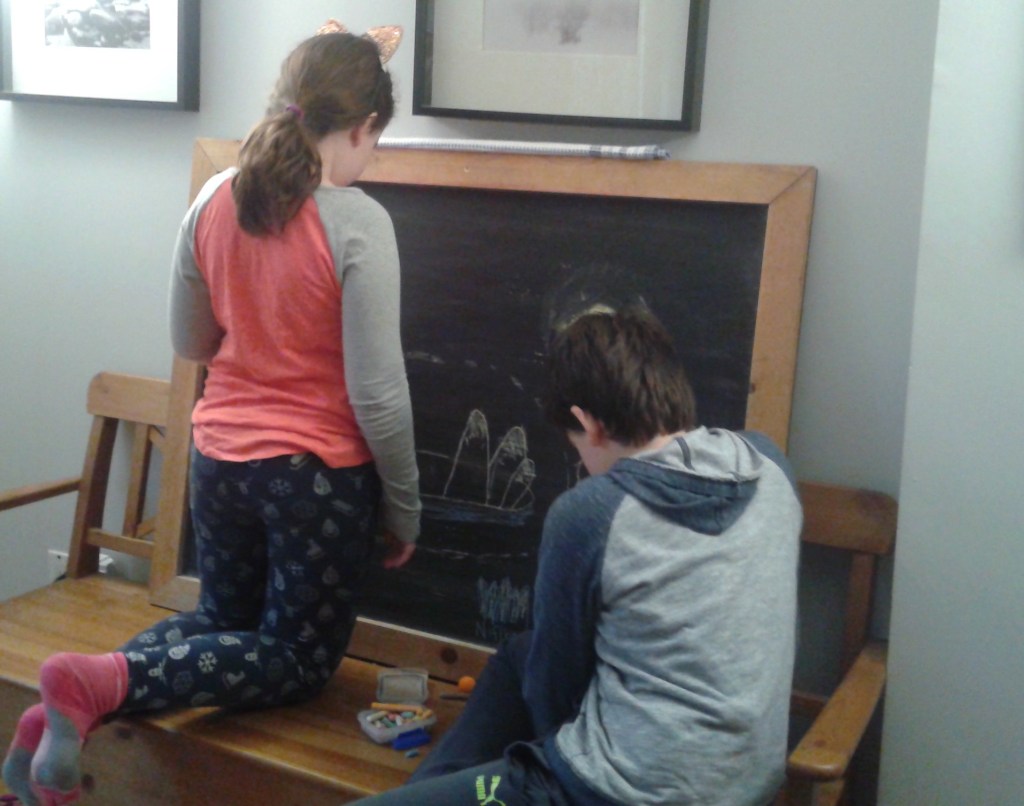
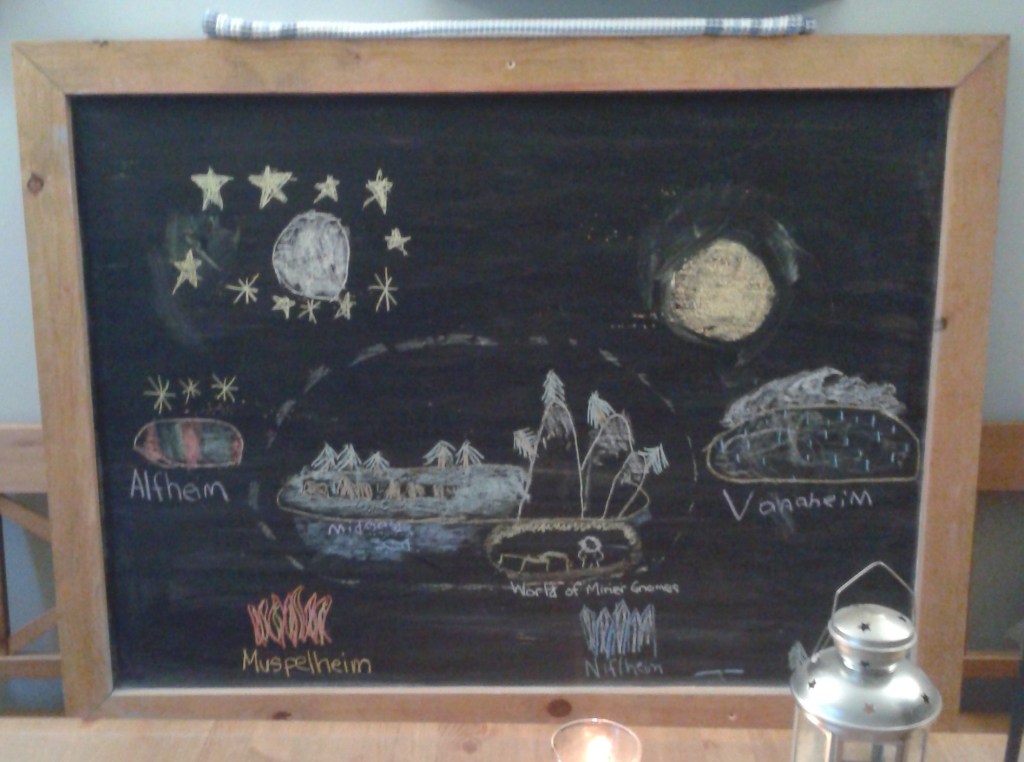
One of my children’s favourite activities has been their joint drawing of the nine norse worlds during the Norse Mythology block. For two weeks they collaborated on creating the chalkboard drawing below as we read stories of the Norse people. They ended up transferring this into their lesson, but the stories of the worlds were so ingrained in their mind and spirit that we took the whole two page spread for the illustration and skipped the summary.
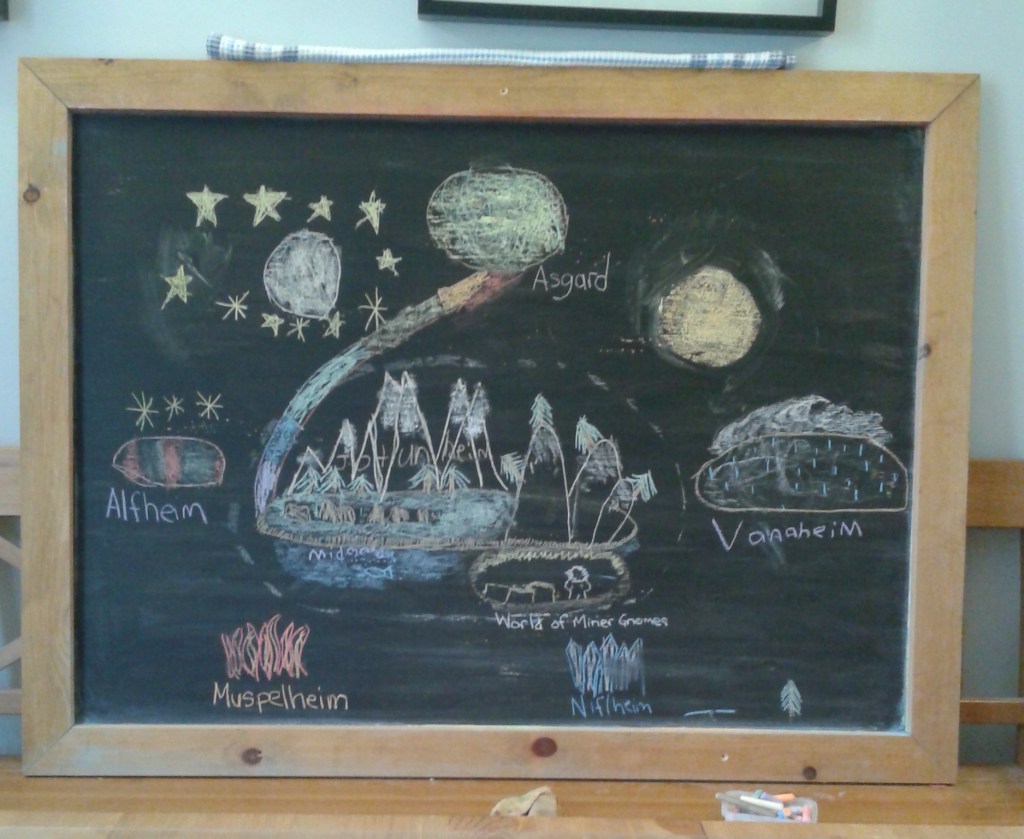
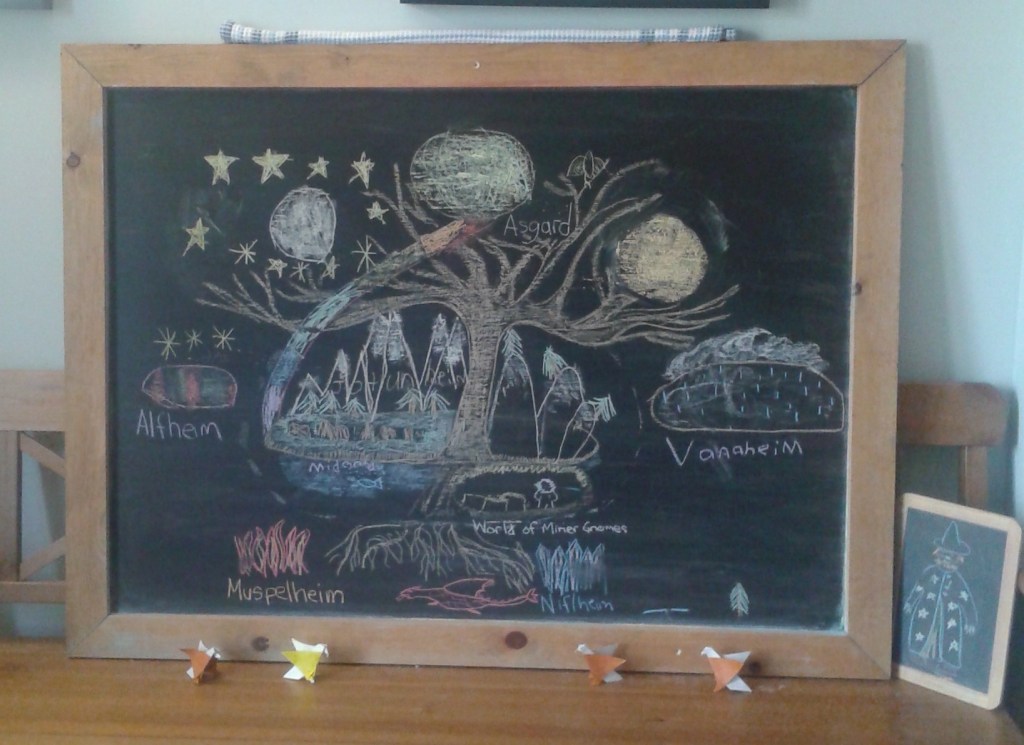
Another fun alternative we did was we did origami ravens and pasted two of them to our lesson book on Odin’s shoulders (You can see them along the bottom of the black board).
We are lovers of moving pictures, and when we were learning about local geography, we did a simple moving picture to show how glaciers created the local escarpment and moraine.
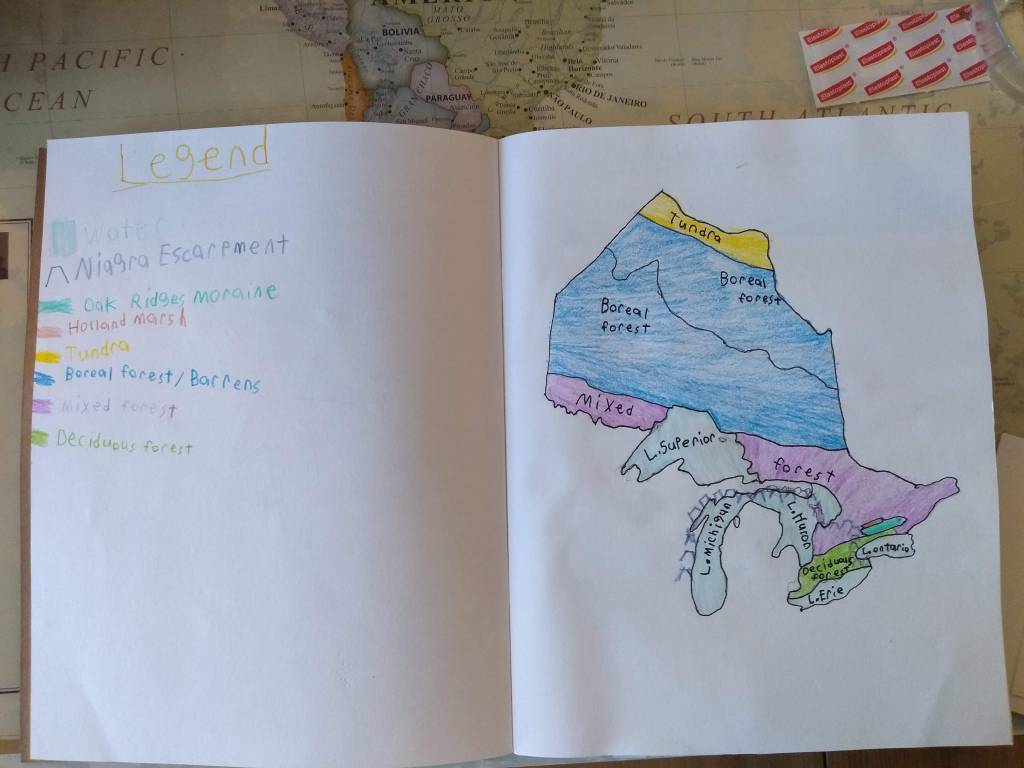
Sometimes, we have one page that we work on for the whole block, adding to it as we discover new information. In the picture below, we were discussing the topography and geography of Ontario, and slowly added landmarks to the map.
This week, we are wrapping up our second week of learning about the tundra, and we made these sliding changing pictures. Each child drew a picture of their favourite part of information (my daughter, the changing fur of an arctic hare, and my son, the change in shelter for the Inuit as the seasons change). These will be included as a lesson page as well!
We often paint for our lessons (so much more forgiving artistically than pencil or crayon!), and will often paste these into our lesson book. This block, the children got the idea to make flip books of information for each forest to compare and contrast their features, so they pasted those under their painting. They had SO MUCH to share about shelters and tools of the woodland, and instead of writing it out, they asked if they could type it out on the computer. They collaborated together and organized their thoughts and then cut and pasted it around their illustrations.

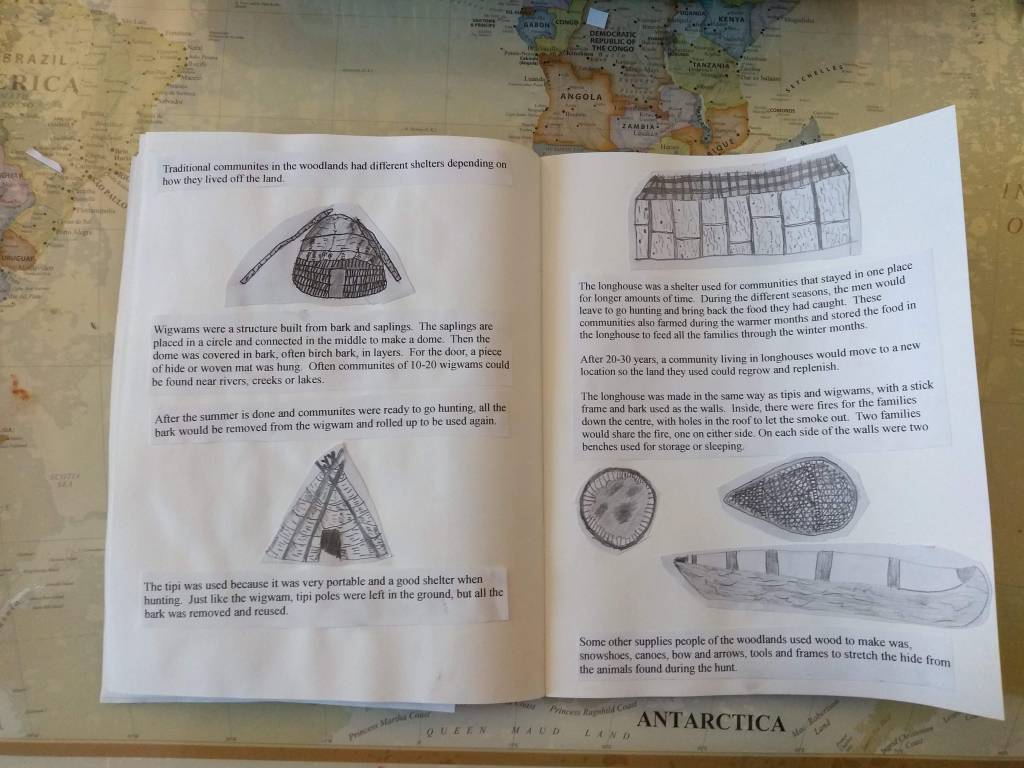
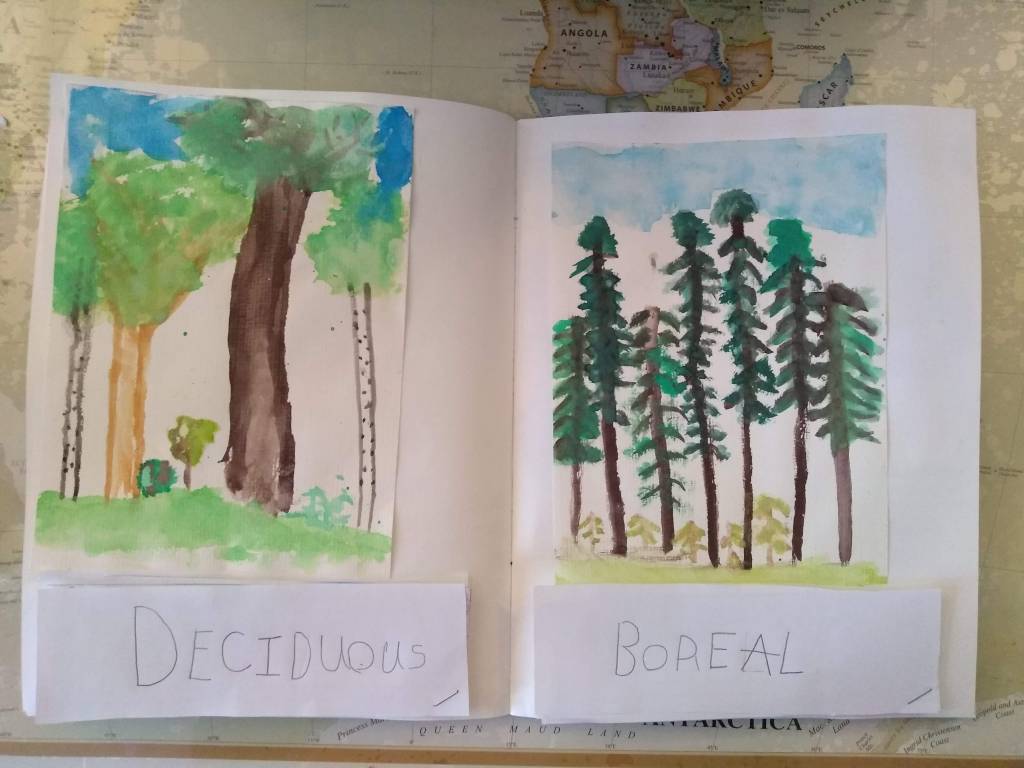
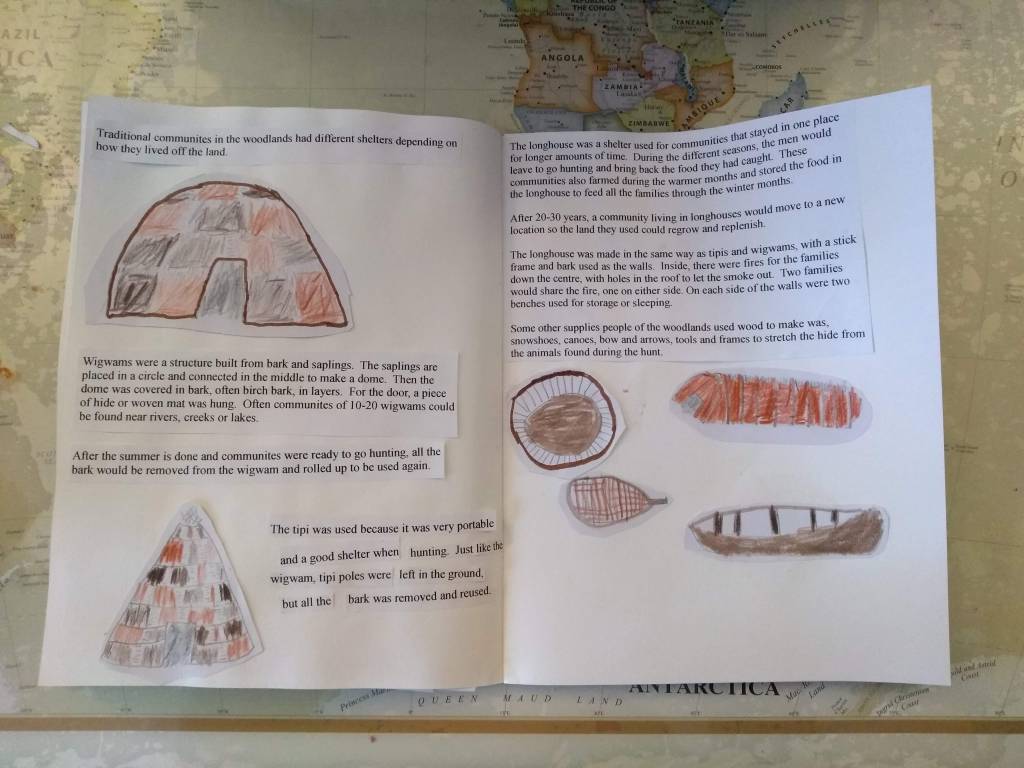
These are just some recent examples of “alternative” entries for main lesson books we have used. It keeps things fresh, and most importantly, it means a lot more to them than just repeating the same process each block.
Do we still do some straight forward copy work and guided drawings/painting? Yup. We do. Sometimes it is nice to just defer to something pre-created! But they make up less of our work now.
I hope you never experience a rut in your lessons! But if you do, I also hope that you might have found a bit of inspiration here on the blog.
Cheers
Marina
Discover more from Growing Together in Freedom
Subscribe to get the latest posts sent to your email.

